Reviewed by Steve Hart, Staff Tech Guru & Matthew Mason, Buyer
If you've stopped by our shoe wall in Toledo, you've probably also stopped by our Garmin case — and asked the same question we hear almost every week:
"Which Garmin should I actually buy?"
It's a fair question. Garmin makes a lot of watches, and the marketing on each box makes them all sound like the one you need. Here's the truth, from the team that fits runners of every level across Northwest Ohio: most runners don't need Garmin's most expensive watch. They need the right watch for how they train.
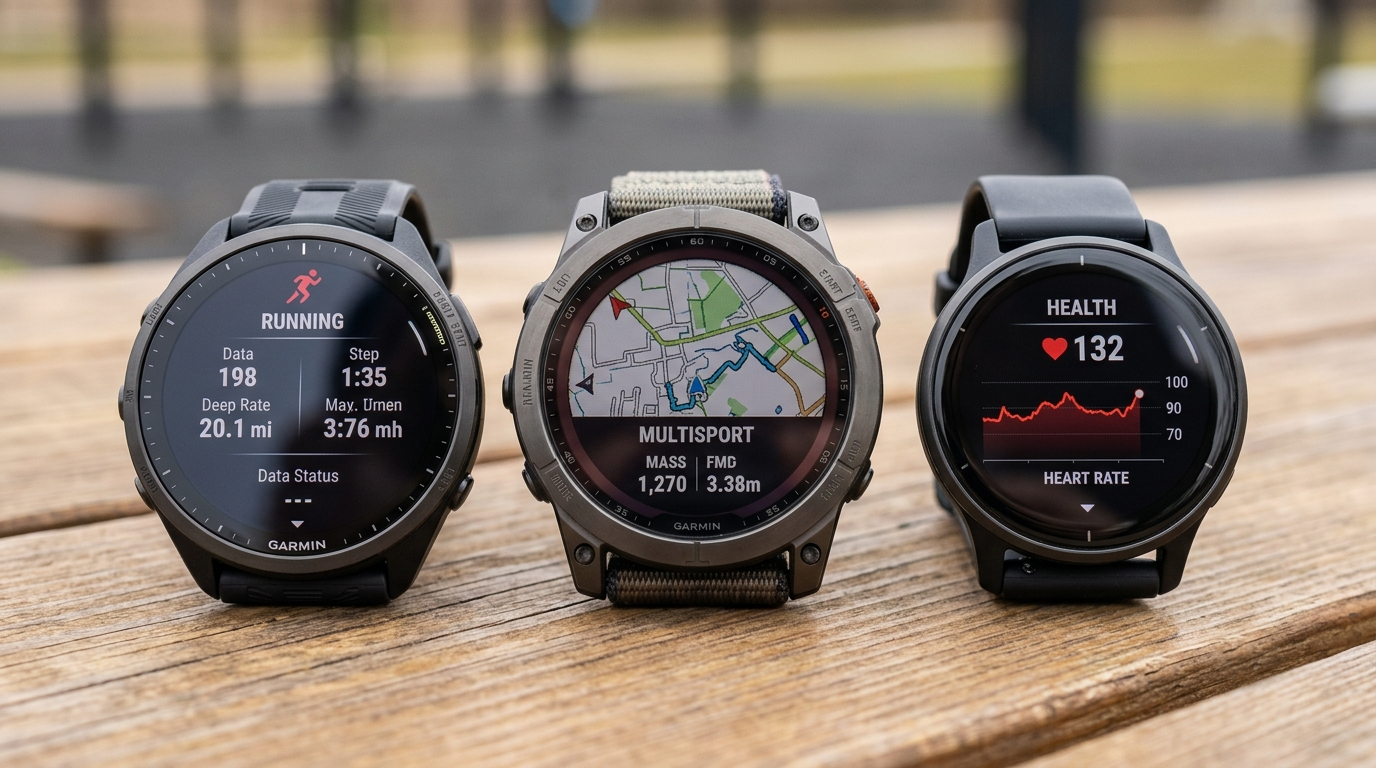
For 2026, the decision for most runners still comes down to three families:
-
Garmin Forerunner — built for running and structured training
-
Garmin Fenix — built for rugged, go-anywhere multisport adventure
-
Garmin Vivoactive — built for everyday fitness and wellness
Let's walk through each one the way we would on the sales floor.

Quick Answer: Choose Your Garmin
Choose a Forerunner if: ✅ Running is your primary sport ✅ You're training for a 5K, half, marathon, or triathlon ✅ You want serious training metrics without paying for features you won't use ✅ You want the best overall value for a dedicated running watch
Choose a Fenix if: ✅ You split time between roads and trails ✅ You hike, backpack, or adventure well beyond pavement ✅ You want onboard topographic maps and multi-day battery life ✅ You're comfortable paying more for the most capable watch Garmin makes
Choose a Vivoactive if: ✅ You want one watch for the gym, walking, and daily health tracking ✅ Running is part of your routine, not the whole thing ✅ You want smartwatch features (payments, notifications, apps) alongside fitness tracking ✅ You want a lower price point to get started
Our take for most runners: the Forerunner is still the smartest first watch — and 2026 made that choice even easier, since Garmin just refreshed the entire entry-level lineup.
Garmin Forerunner: Built for Runners
If we had to describe the Forerunner in one word, it's focused. This lineup exists for one reason: to help runners train smarter and race faster, without burying you in features built for scuba diving or ski mountaineering.
2026 update: Garmin significantly refreshed the Forerunner family this year. The long-running Forerunner 55 and Forerunner 165 have been replaced by the new Forerunner 70 and Forerunner 170, both moving to bright AMOLED touchscreen displays for the first time at that price point — a big jump for anyone still running with an older model. That means the current lineup runs from an approachable entry watch all the way to the flagship:
Dave's Running Shop
Garmin Forerunner Lineup, 2026
Entry-level to flagship — find your fit
| Model | Best For |
|---|---|
| Forerunner 70 | New runners, first GPS watch, essential training metrics |
| Forerunner 170 | New runners who also want music, payments, and cycling support |
| Forerunner 265 | Serious runners who want a proven mid-range watch at a great price |
| Forerunner 570 | Runners who want nearly flagship features in a lighter package |
| Forerunner 970 | Marathoners and triathletes who want Garmin's most advanced running watch |
Best For: Road runners, half marathoners, marathoners, triathletes, and anyone following a structured training plan.
Key Features:
-
Advanced running metrics and running-specific coaching
-
Multi-band GPS on Forerunner 265 and above for tougher accuracy in cities and tree cover
-
Training Readiness, Recovery Time, and VO2 Max estimates
-
Race predictions and daily suggested workouts
-
Lightweight design built for daily training miles
Pros: ✔ Designed specifically for runners, not adventurers or golfers ✔ Lightweight and comfortable for long runs and everyday wear ✔ Excellent training and recovery tools ✔ Strong battery life for training blocks and race day ✔ Better value than the premium Fenix line for most runners
Cons: ✖ Less rugged than the Fenix ✖ No onboard topographic mapping ✖ Built for performance first, adventure second
Garmin Fenix: The Swiss Army Knife of GPS Watches
The Fenix is what happens when Garmin puts nearly everything it knows into one watch. Running features, full-color topographic mapping, navigation, altimeter, barometer, compass, and genuinely rugged construction — it's all here.
The current flagship is the Fenix 8, with a Fenix 8 Pro version that adds LTE connectivity and two-way satellite messaging for true off-grid safety, plus a titanium bezel and sapphire lens for extra durability.
Here's the honest part: a lot of runners buy a Fenix because it's Garmin's flagship, then end up using only a fraction of what it can do. Independent testers who've run half marathons in both watches consistently note that the Forerunner 970 now shares the same GPS chip and heart rate sensor as the Fenix 8 — the Fenix's real advantage is durability, battery life, and mapping for genuinely remote terrain, not running performance itself.
Best For: Trail runners, ultra runners, hikers, backcountry adventurers, and multisport athletes who need one watch for everything.
Key Features:
-
Advanced running metrics plus full outdoor navigation
-
Full-color topographic mapping
-
Altimeter, barometer, and compass
-
Longer battery life for multi-day adventures
-
Premium materials and top-tier water resistance (dive-rated on select models)
Pros: ✔ Garmin's most capable watch, full stop ✔ Exceptional durability for trail and backcountry use ✔ Outstanding navigation and mapping ✔ Great for ultras and multi-day efforts
Cons: ✖ Higher price point ✖ Heavier on the wrist than most Forerunners ✖ Many road runners won't use the mapping or dive features they're paying for
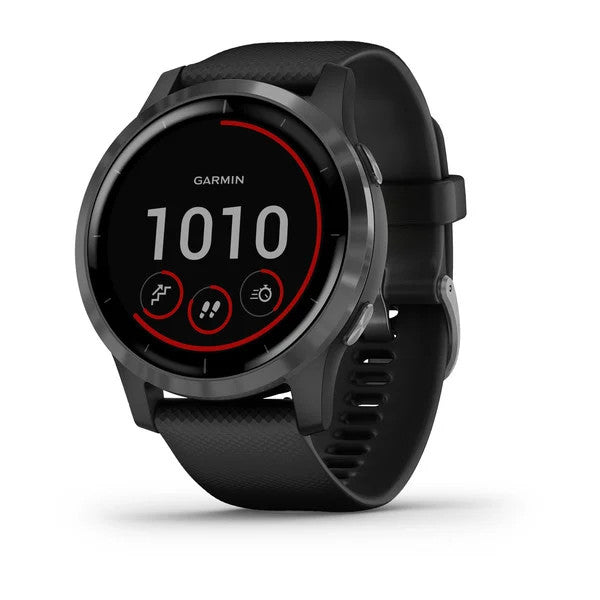
Garmin Vivoactive: Fitness Without the Complexity
The Vivoactive is the watch we most often recommend to people getting active who don't necessarily call themselves "runners" yet — including many of our walking customers here in the shop. The current Vivoactive 6 covers running, walking, strength training, cycling, and everyday health tracking in one easy-to-use package.
Best For: New runners, walkers, gym-goers, and anyone who wants strong everyday health tracking without a steep learning curve.
Key Features:
-
GPS tracking and heart rate monitoring
-
Sleep and stress tracking
-
Smart notifications and contactless payments
-
Music storage
-
Multiple sport modes for cross-training
Pros: ✔ User-friendly for first-time GPS watch owners ✔ Strong smartwatch functionality ✔ Affordable entry point ✔ Excellent everyday wellness tracking
Cons: ✖ Limited advanced running metrics compared to Forerunner ✖ Less detailed training analysis ✖ Runners training for a specific race will likely outgrow it
What Is HRV, and Why Does Garmin Talk About It So Much?
One of the most common questions we hear at the fitting bench: "What exactly is HRV?"
HRV stands for Heart Rate Variability — the small variations in time between each heartbeat. Instead of measuring how fast your heart beats, it measures how consistently it beats. A well-recovered body tends to show more variability. A fatigued or overtrained body tends to show less.
Think of resting heart rate as how hard the engine is working, and HRV as how well the engine is handling the workload.
One important caution worth passing along here: independent research on Garmin's optical sensors — including a university study on the Forerunner 265 and a separate analysis across 62 Garmin devices — found resting heart rate to be accurate, but flagged the HRV readings themselves as not reliable enough for clinical use. That doesn't make HRV useless for training — it just means the trend over one to two weeks matters far more than any single night's number. If your HRV has been steadily dropping, that's worth listening to. One low reading after a bad night's sleep is not.
Which Garmin Running Metrics Actually Matter?
Garmin hands runners a lot of data. Here's what we actually pay attention to when we're coaching customers through their training.
Training Readiness — Combines sleep, recovery, recent workouts, stress, and HRV into one score. Not perfect, but a quick gut-check on whether today's a day to push or a day to ease off.
VO2 Max — Estimates aerobic fitness. The trend over months matters more than the single number.
Recovery Time — Underrated. Plenty of runners are great at training hard and not nearly as good at recovering. This metric helps keep that balance honest.
Training Load — Answers the simple question: am I doing enough, or too much? Used consistently, this is one of the most valuable numbers Garmin offers.
Running Dynamics: Helpful, or Just More Data?
For most runners, focus on:
-
Cadence — steps per minute; a smoother cadence often means better running economy
-
Stride Length — often improves naturally as fitness improves
-
Running Economy — newer Garmin watches estimate this to track efficiency over time
Metrics like Ground Contact Time, Vertical Oscillation, and Left/Right Balance are interesting — and genuinely useful for a coach working one-on-one with you — but for most runners, consistency, recovery, and training volume still matter far more.
Garmin Forerunner vs. Garmin Fenix: The Real Comparison
This is the one most runners are actually trying to decide. The honest answer: the performance gap is smaller than people think. Both watches now share the same GPS chip and heart rate sensor on their top models. The real difference is everything surrounding the running experience — weight, durability, mapping, and price.
Choose Forerunner if: running is your primary sport, you want the lightest watch on your wrist for daily training, you race frequently, and you want the best value.
Choose Fenix if: you trail run regularly in remote terrain, you want onboard topographic maps, you want maximum battery life for multi-day efforts, or you want satellite connectivity for backcountry safety.
For most road and everyday trail runners we fit in Toledo, Sylvania, and Perrysburg, the Forerunner remains the smarter purchase.
Garmin Forerunner vs. Garmin Vivoactive: The Easier Call
Choose Forerunner if: performance matters, you follow structured training plans, you race regularly.
Choose Vivoactive if: fitness is the priority, running is secondary, and you want strong smartwatch features.
The Vivoactive does a great job tracking your workouts. The Forerunner does a better job helping you improve them.
Dave's Running Shop
2026 Garmin Comparison at a Glance
Forerunner vs. Fenix vs. Vivoactive — feature by feature
| Feature | Forerunner | Fenix | Vivoactive |
|---|---|---|---|
| GPS Accuracy | Excellent | Excellent | Very Good |
| Training Readiness | Yes | Yes | No |
| Recovery Metrics | Yes | Yes | Limited |
| VO2 Max | Yes | Yes | Yes |
| Running Dynamics | Advanced | Advanced | Basic |
| Topographic Mapping | No | Yes | No |
| Satellite Connectivity | No | Pro model only | No |
| Weight for Running | Lightweight | Heavier | Lightweight |
| Price | Entry to Mid/Premium | Premium | Budget-Friendly |
The Dave's Running Shop Verdict
If your primary goal is becoming a better, more consistent runner, we still believe the Garmin Forerunner is the best fit for most people walking through our doors — whether you're training for your first Glass City Marathon or chasing a Boston qualifier. It gives you the metrics that actually matter, stays comfortable through long training blocks, and delivers excellent value against the pricier Fenix line.
The Fenix is a genuinely outstanding watch, but unless you're regularly on remote trails or need satellite connectivity, you likely won't use enough of what you're paying for.
The Vivoactive is a great entry point into the Garmin ecosystem and a favorite among our walking community, but serious runners will eventually outgrow its training depth.
At the end of the day, the best watch is the one that helps you stay consistent — and the right one depends on how you actually train, not which box looks the most impressive on the shelf.
Not sure which one fits your training? Stop by Dave's Running Shop for a fitting and we'll help you find the right Garmin for your goals — no guesswork required.
Frequently Asked Questions
Which Garmin watch is best for marathon training? For most marathon runners, the Garmin Forerunner provides the best balance of training tools, comfort, battery life, and value. The Forerunner 265 and 570 are our most popular picks for marathoners in the shop.
Is the Garmin Fenix better than the Garmin Forerunner? Not necessarily — they're built for different goals. The Fenix offers more navigation, mapping, and outdoor adventure features, while the Forerunner focuses more directly on running performance at a lighter weight and lower price.
What is HRV on a Garmin watch? HRV stands for Heart Rate Variability. It measures the variation between heartbeats and helps Garmin estimate recovery, training readiness, and overall training adaptation. It's best tracked as a trend over time, not a single daily number.
Do I need to pay attention to Running Dynamics? Most runners don't need to obsess over Running Dynamics. Consistent training, proper recovery, and smart pacing will move the needle on your performance far more than fine-tuning vertical oscillation.
Is the Garmin Vivoactive good for running? Yes — it's a great fitness watch for casual and new runners. Serious runners training for specific race goals will likely want the deeper training tools found in the Forerunner lineup.
Which Garmin watch should I buy? If running is your primary focus, choose a Forerunner. If you spend significant time on trails and remote outdoor adventures, consider a Fenix. If you want a fitness smartwatch with occasional running features, the Vivoactive is a great option.
Not sure? Come see us at Dave's Running Shop — we'll fit you to the right watch, not just the most expensive one.