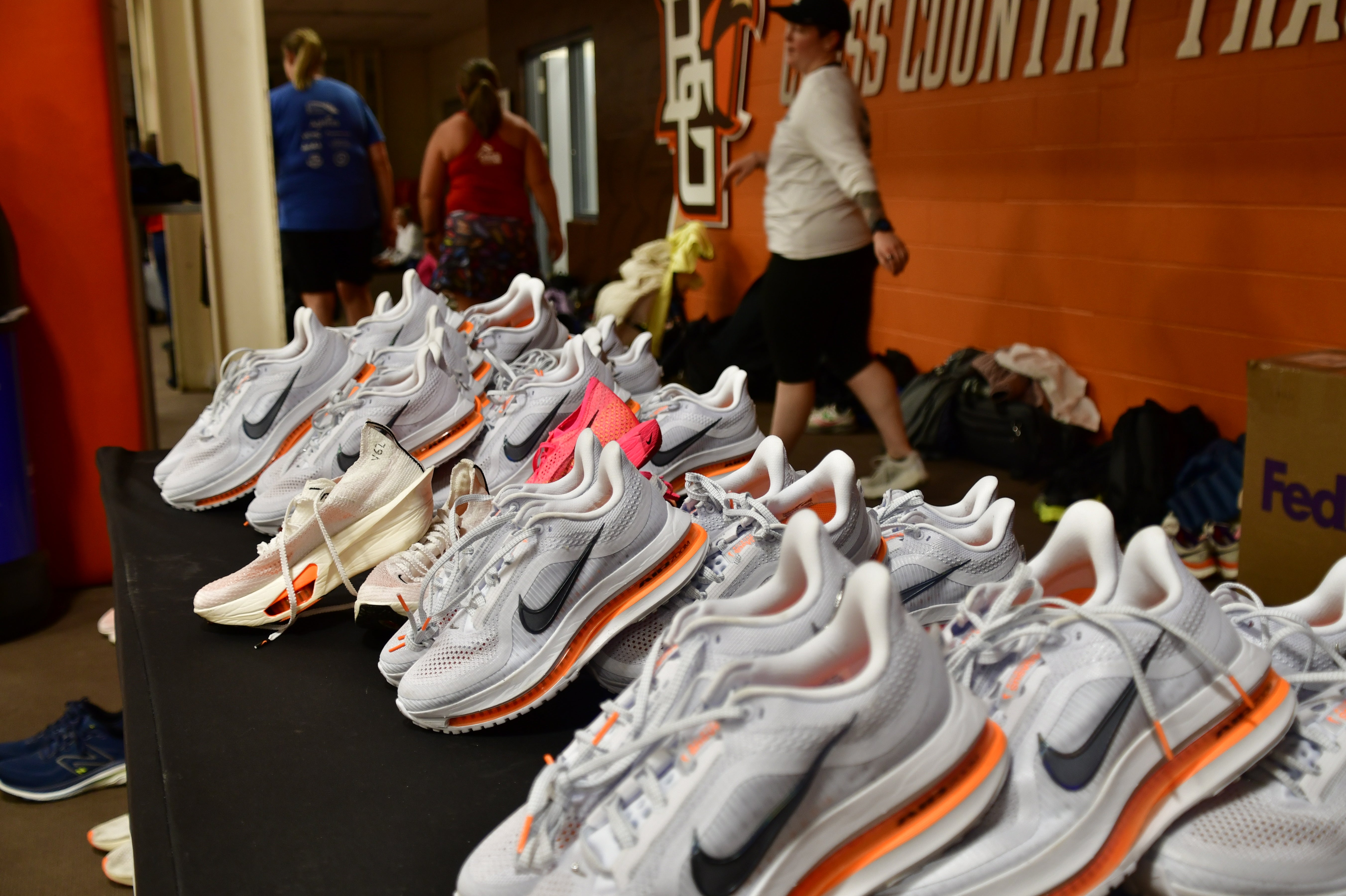
Walking into a running store can be overwhelming. The walls are filled with shoe models of varying brands, shapes, styles, and colors. Some brands you may have never even heard of, and trying to pick the “right” shoe out of dozens can seem impossible. Fortunately, the Dave’s Running Shop staff are here to help guide you.
They may start off by asking if you’ve been fitted before, what shoes you have worn previously, and if you wear inserts or a custom orthotics. They may ask what you do or do not like about your current shoes, or if you are experiencing any pain in your feet or knees. They will measure your foot and watch you walk depending on your answers. Then, the staff begin suggesting shoes based on your gait and experience. They may say things like, “You might want to try a lower drop,” or, “A straight-lasted shoe would probably support your supination better.” You, the customer, most likely do not know what many of those terms mean. This is a comprehensive explanation of many shoe and foot related terms you might come across during a shoe fitting, which will help you to better understand your own foot and experiences.
Regions of the Foot
Let’s begin with the human foot. The foot has three general regions: the heel, midfoot, and toebox. The toebox refers to the area of the foot where the metatarsals and toes meet all the way through the tips of the toes (the forefoot of the shoe). It is where many people may need a wider fit than others due to arthritis, bunions, or reconstructive surgeries. Some people have wide toeboxes but narrow heels, and others have wide heels and wide midfoots. Running shoes address each area in different ways to provide options for different foot types.
Curved Last vs. Straight Last
One method of addressing different foot types is the shape or “last” of the shoe. There are two kinds of lasts: curve-lasts and straight-lasts, and the way to tell is to flip the shoe upside down and to take a look at the outsole. Curved lasted shoes will be what is often described as “figure-eight” shaped—a curved/narrow middle section and wider toeboxes. Straight-lasted shoes have a broader midfoot to accommodate more width and have more volume for a foot that needs more depth or to accommodate an insert that takes up more space in the midfoot. But what is the function of each type of last?
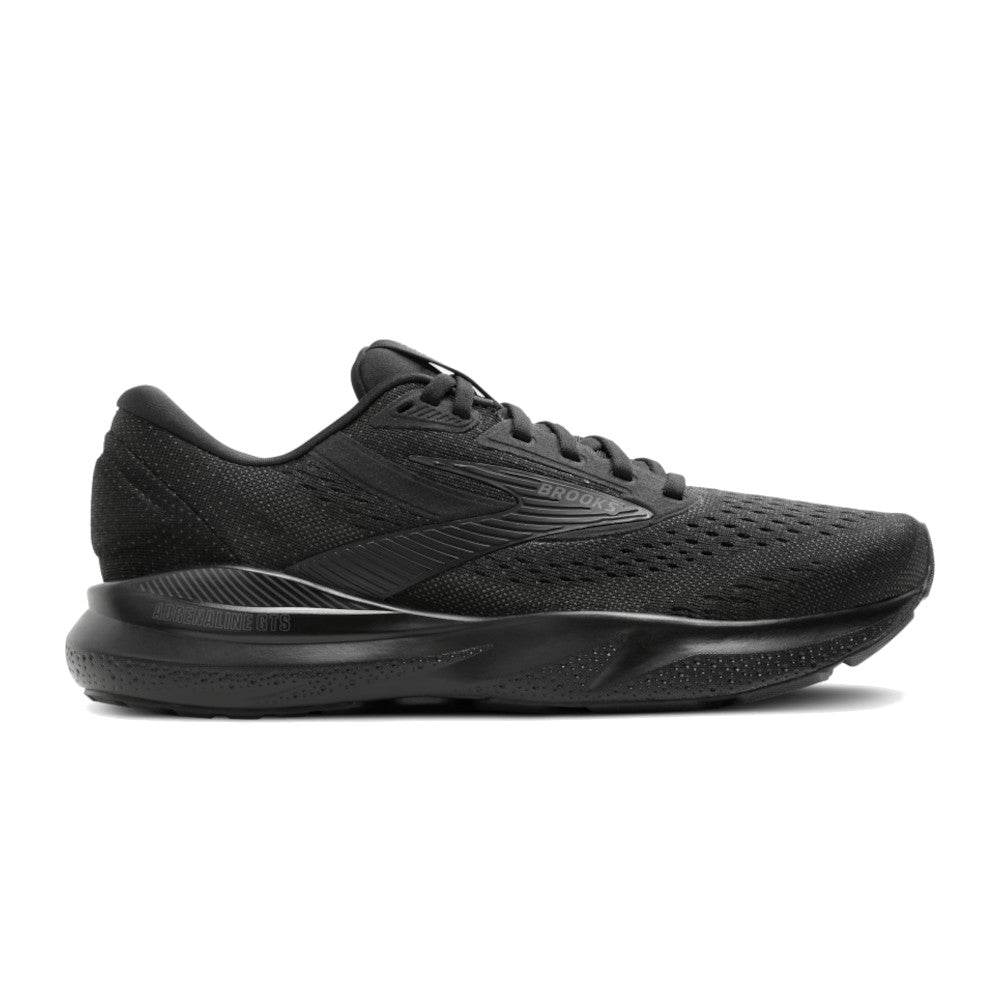
Many traditional running shoes are made on a curved-last, such as the Brooks Ghost or the Nike Pegasus, and many athleisure shoes found on the market. They offer a contoured fit that tends to work best for feet that are similarly shaped, meaning a slender midfoot and (there is no evidence of this nor is it true for a woman’s heel in industry standard) heel and toebox, and those that have a narrower foot in its entirety. They grip the contoured midfoot and tend to be lightweight. Straight-lasted shoes, on the other end of the spectrum, generally provide a better fit for feet with wider profiles, notably in the midfoot region. Those with a wider foot shape benefit from having more sole underneath their foot, rather than a curved last that would leave a gap in support which is often visually signified in an overhanging arch or collapsing sole, caused by the foot being wider than the shoe and doesn’t have a stable base.
Neutral vs. Stability
Other features of running shoes that are used to address varying foot types are the categories of neutral and stability. This is where watching the customer walk comes into the fitting process. The main factor that determines whether or not someone needs a neutral or stability shoe is ankle and arch movement. If the arch and ankle collapse and roll inwards, a motion called “overpronation” or just “pronation”, then stability shoes will be recommended to help align the ankle and knees into a more neutral position. If the feet or ankles have an outward roll, called “supination” or “underpronation”, neutral shoes are the best option to cradle the foot. If there is excessive supination, a shoe with a wider last (shape) may accommodate the outward roll. If there is minimal or no movement, the feet are neutral and do not require added stabilizing features in their shoes. Neutral shoes are also recommended if custom orthotics or over-the-counter supportive inserts are being used, as stability shoes in combination with orthotics can oversupport the foot and cause other issues. There are exceptions for every rule, as each body compensates differently and feet and feelings are unique to the individual.
Arch vs. Instep
Some other aspects the staff might mention when fitting customers is arch and instep height. The two are often confused and mistakenly used interchangeably, but they refer to different parts of the midfoot. The arch is the underside of the midfoot, referring to the amount of arced space between the foot and the ground when standing, while the instep refers to the top and girth of the midfoot as a whole. Arch height can dictate which shoes are more comfortable than others based on how high the arch of the shoe is. A low arch means a flatter foot, though low arches do not always indicate pronation (inward leaning). Likewise, high arch often, but not always, is linked with supination (outward leaning). A high instep may require a straight lasted shoe that provides more depth/volume for the top of the foot where a shallow fitting shoe may put pressure on the foot.
Heel Drop
The “drop”of a shoe refers to the difference between the height of the heel and the height of forefoot (front of the shoe). The lower the drop, the easier it is to move where your foot hits the ground toward middle of the foot. A higher drop shoe (10-12mm) is sometimes recommended by medical professionals to alleviate achilles tendon issues. A low drop shoe (0-4mm) may require an adaption period where the wearer adjusts to a shoe that may work their lower leg and intrinsic foot muscles. A majority of shoes will have a drop between (12-6mm).
Midsole
The most common factor that is brought up during a shoe fitting is the midsole (also known as the cushion). The degree of cushioning is known as minimal, standard, and high/maximum cushioning. The amount of cushion a person may prefer can depend on what the intend to use the shoe for, their own injury history, and surfaces upon which they move. Foams will vary from brand to brand. Certain midsoles will feel more plush or softer while others more responsive or firmer. What works best for one individual may not work best for another which is why it’s important to try on an assortment of different brands
The support of a shoe can also be found in what materials are utilized in the midsole. For a person who overpronates and has a history of issues, a shoe fitter will recommend a stability shoe. A stability shoe will use a denser material in the midsole or a guide rail to slow down the inward lean that is a result of over pronation.
If you wear a custom orthotic, a more responsive or firmer midsole/cushion may support that orthotic better than a soft shoe.
Outsole
The outsole of a shoe is the very outer base that is the first point of contact between the shoe and the ground. The outsole will be made of a blow rubber to provide traction on the ground. Some shoes may have an outsole that does not have as much traction. If you know you will be moving in an environment where traction is important, check with the shoe fitter about the outsole of the shoe.
Non road running shoes or trail shoes will have “lugging” that are extended nubs on the outsole that provide better traction on dirt, grass, and depending on the length of the lugs, damp surfaces.