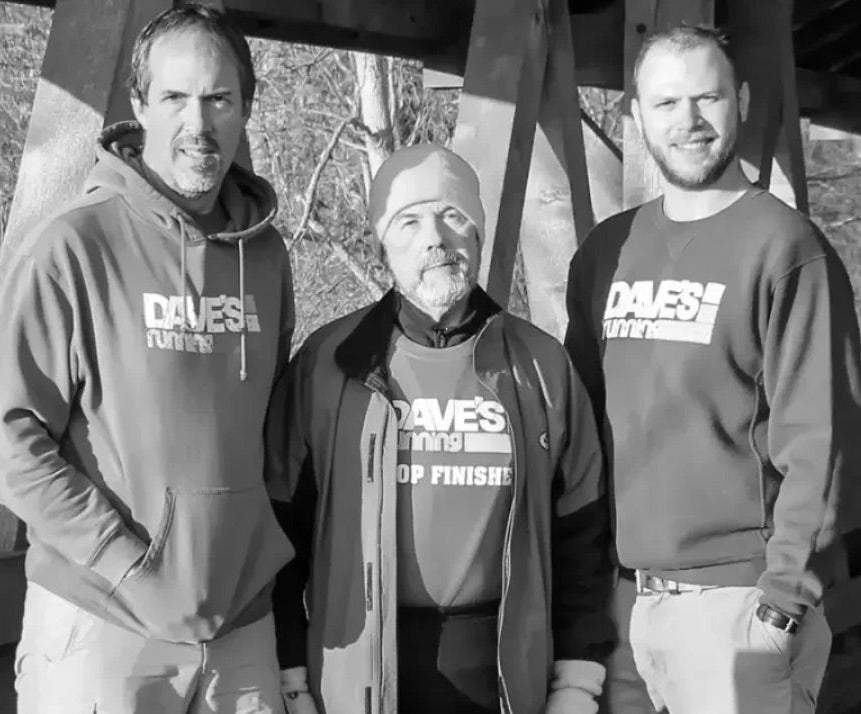
Every specialty running store has an origin story. Most of them start with someone who loved running so much they decided to sell shoes for a living. Dave's Running Shop started almost the opposite way: Dave Mason didn't set out to build a running store. He set out to lose weight.
A Runner Is Born in Delta, Ohio
In 1973, Dave Mason weighed nearly 200 pounds and decided it was time for a change. He started running — not competitively, not for a business plan, just to get healthier. It's the same reason a huge share of Dave's customers still walk through the door fifty years later. One of Dave's earliest races was a 13-mile event held in the dead of winter, in the Delta, Ohio area. He'd only been training a few miles a day beforehand. He finished dead last. His reaction has become a bit of family legend: "That will never happen again."
It didn't. Running stopped being a weight-loss project and became a way of life — for Dave, and soon for his wife, Sandra, and their whole family.

From Runner to Retailer: The Traveling Shoe Store
As running exploded in popularity through the 1970s, quality running shoes were genuinely hard to find in Northwest Ohio. Big department stores didn't carry real racing flats or properly fitted training shoes. Dave saw the gap — and instead of waiting for a storefront, he brought the shoes directly to runners. The Mason family loaded shoes into vehicles and traveled across Ohio and into Southeast Michigan, setting up at:
- YMCA running clinics
- Road races and marathon expos
- School gyms and convention centers
- Company and community track & field clinics
Whole weekends went to hauling boxes of shoes up flights of stairs, fitting runners on folding tables, and packing it all back up to do it again the next town over. It wasn't glamorous — but it built the thing that still defines Dave's today: real relationships with real runners, one pair of shoes at a time.
When the Garage Became the Business
As the traveling shoe operation grew, the Mason family garage in Delta quietly turned into a warehouse. The cars that used to park there got evicted for good. At its peak, the garage held a genuinely staggering amount of running shoe inventory — far more than most side businesses would ever carry in the mid-1970s.
Local runners started showing up at the house directly to buy shoes. That kind of demand doesn't stay in a garage forever — which is exactly what set up the next chapter of the story: opening Dave's first real storefront.