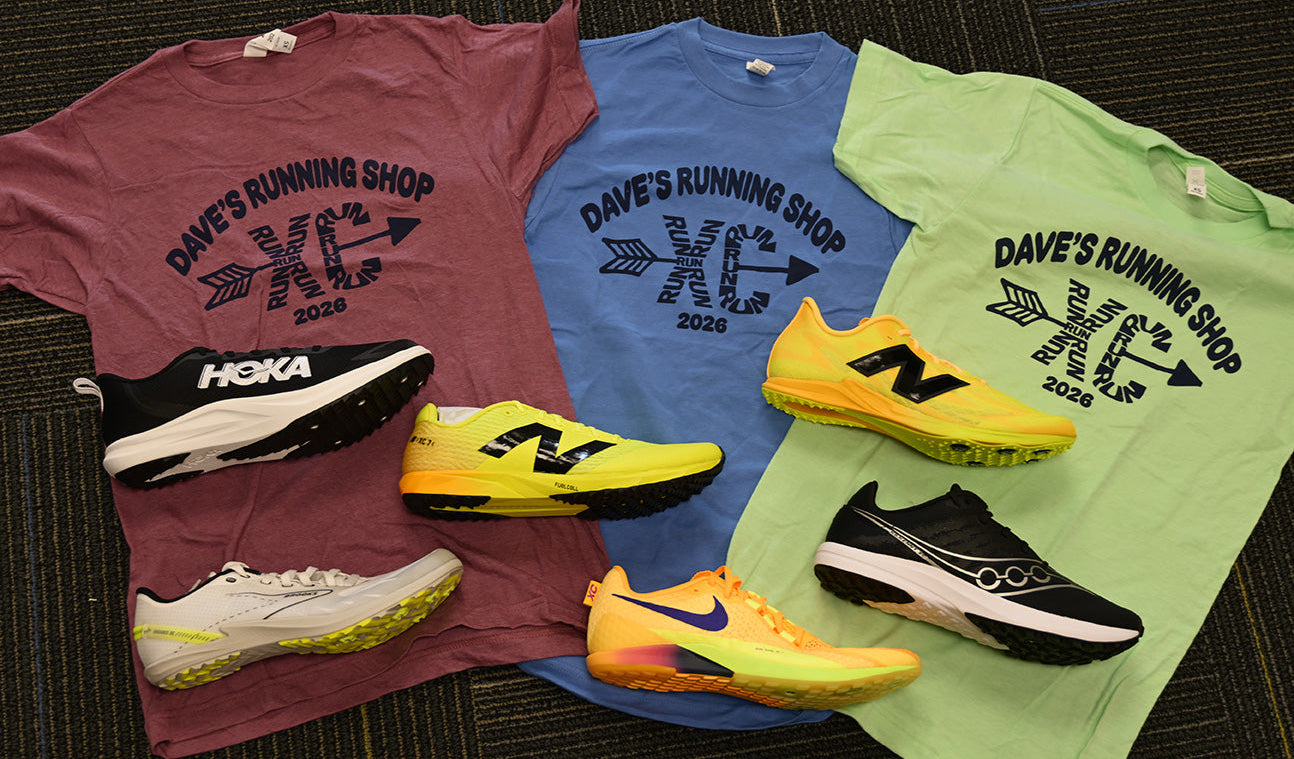
The Ultimate Guide to Shopping for Cross Country
Summer hits differently once you're a cross country runner. While everyone else is soaking up the last lazy weeks before school starts, you're already up before sunrise, trading pavement for grass, and counting down to that first crisp fall race. Cross country season sneaks up fast, and the runners who show up prepared are the ones toeing the line with confidence in August.
At Dave's Running Shop, we've been outfitting Northwest Ohio's cross country athletes since 1973 — and every season we hear the same questions from parents and runners in Sylvania, Perrysburg, Findlay, Delta, and everywhere in between: What shoes do I actually need? Do I need spikes? What's the difference? This guide covers it all, so you can walk into your local Dave's and walk out ready to race.

What Is Cross Country, Anyway?
Cross country is a fall sport built around distance racing over natural terrain — grass, dirt, gravel, and everything in between, often with hills and unpredictable footing thrown in. Distances vary by age and level, ranging from roughly 3K for the youngest athletes up to 8K or 10K at the collegiate level. Most high school races land at 5K, or about 3.1 miles.
Unlike a road race, a cross country course changes with the weather and the calendar. A dry, firm course on Friday can turn soft and muddy by Saturday. Teams typically field at least five scoring runners, with rosters often running seven to ten athletes deep, and the season builds toward postseason and championship racing. It's a sport that rewards preparation — and that starts with your gear.
The Two Shoes Every Cross Country Runner Needs
Here's the single most important thing to understand before you shop: cross country runners need two different shoes, and they are not interchangeable.
1. The Trainer — Your Everyday Workhorse

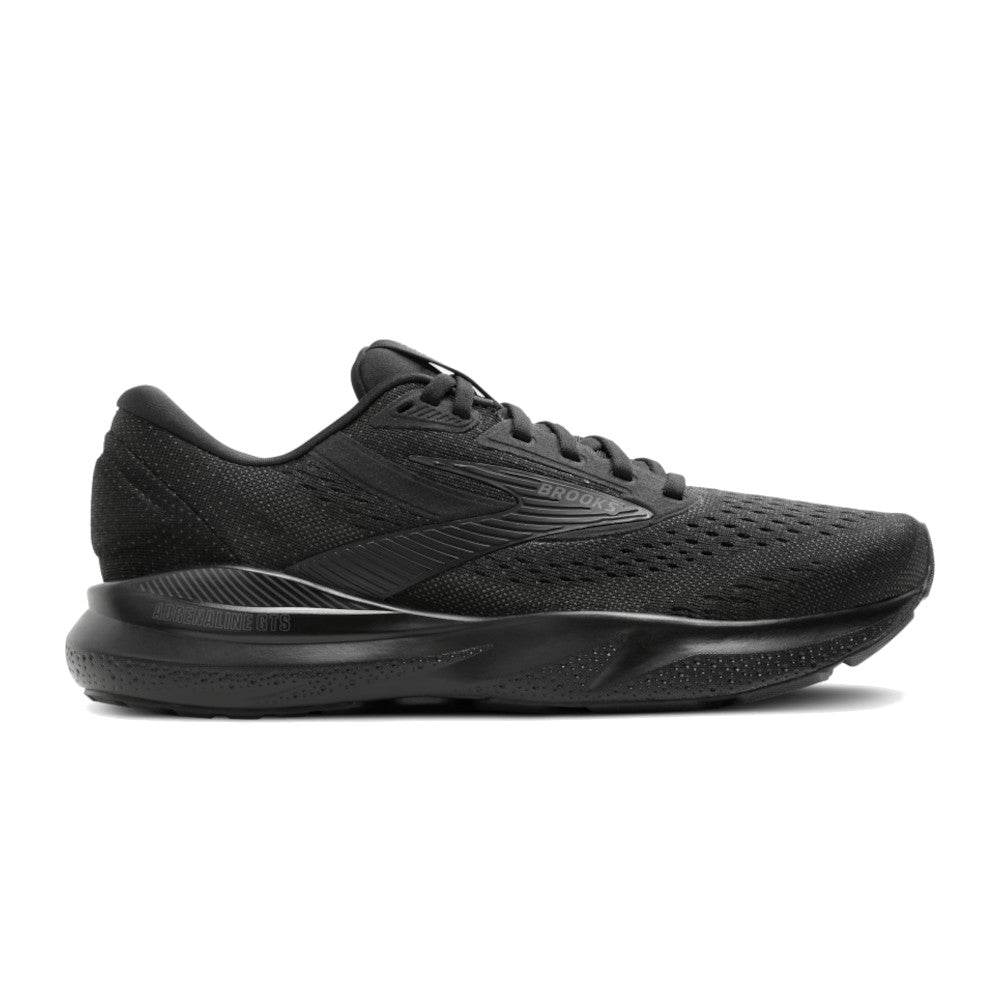
An athlete's training shoe is the piece of equipment they'll rely on for the majority of the cross country season, and for cross country, a road running shoe is the right call. A good trainer is built with real cushioning and support to carry a runner through long runs, speed work, and recovery runs alike — which is exactly what helps keep shin splints and other overuse injuries at bay. Most trainers are built to hold up for roughly 300 to 500 miles before they need to be replaced, a helpful number to keep in mind as the season goes on.
Trainers are not built to survive true off-road conditions the way spikes are, and spikes are absolutely not built for daily road mileage. If your athlete is only going to own one pair of shoes this season, it should be a properly fitted trainer. This is also where a real fitting matters most — our Dave's Fit Staff will measure for proper size and assess gait to recommend the type of trainer that actually matches a runner's training needs, not just whatever's popular online.
2. The Spike — Your Race-Day Weapon
Spikes are built for competition day, giving cross country runners everything they need to race at their best. Compared to a trainer, a spike cuts back on weight, support, and cushion in exchange for a fitted, lightweight shoe with a spike plate that provides traction across a variety of grass, dirt, and mud conditions. Because they're so lightweight and minimally cushioned, spikes see far less mileage than trainers before they wear out — typically good for about a single season of race days rather than hundreds of training miles.
Spikes come in different pin lengths to match course conditions. A typical length for cross country spikes is 3/8 inch, though some athletes use 1/4-inch spikes depending on the plate. For muddy conditions, runners switch to 1/2-inch spikes for better grip. Most spikes use a spike wrench so runners can swap pin lengths as course conditions change throughout the season — something our staff can walk you through at your fitting.
Modern racing spikes have also evolved with carbon-fiber plate technology, just like top road racing shoes, designed to return energy with every stride for a spring-like effect on footstrike. That said, plated spikes aren't the right call for every runner. They tend to be best suited for high school–aged athletes who are already running at a competitive pace — generally those approaching or breaking the 20-to-21-minute mark for a 5K. Middle school athletes and less-developed runners can actually be at greater risk of injury in a stiff-plated spike, since it takes a certain running form and turnover to get the intended benefit safely. This is exactly the kind of nuanced call our staff talks through with families at every fitting, because the right shoe isn't the most expensive one — it's the right one for that runner's stage of development.
Bottom line: the trainer keeps you healthy and race-ready all season. The spike helps you run your fastest on the day that counts. Trainers are what your athlete uses every day, so it's the most important piece of equipment for cross country — but spikes help immensely once the footing turns muddy.

Trainer vs. Spike: What's Actually Different
The two shoes are built differently in every layer, and understanding why helps explain why one can't substitute for the other.
Upper: A daily trainer typically uses more material in the upper than a spike does, for durability across hundreds of miles. A cross country spike still has a real upper built for all-terrain conditions — unlike a track spike, which is built for the consistent, controlled surface of the track and doesn't need the same coverage.
Midsole: Daily trainers carry a higher-stack foam midsole, built to absorb shock across every speed of running, from easy days to long runs. A spike carries less stack height by design, to cut weight for performance — cross country races are run mostly on grass, so there isn't the same need for heavy cushioning that road racing demands. Just like top road racing shoes use a carbon-fiber plate in the midsole, so do high-end cross country spikes, adding energy return with every stride.
Outsole: Most daily trainers use a blown rubber outsole for everyday traction. A cross country spike's outsole uses a rubber spike plate to hold removable pins — rubber holds up better across all terrain than the plastic spike plate found on a track spike. Spike length varies by condition: 3/8 inch is typical, with 1/4-inch options depending on the plate, and 1/2-inch spikes reserved for muddy conditions.
Trainer vs. Spike: Quick-Reference Comparison
How a daily trainer, cross country spike, track spike, and road racing shoe are actually built to differ.
| Trainer | XC Spike | Track Spike | Road Racing Shoe | |
|---|---|---|---|---|
| Upper | Durable mesh or synthetic | Lightweight, built for all-terrain conditions | Less durable than an XC spike — built for a consistent track surface | Lightweight mesh or nylon, less structured than a trainer |
| Midsole | More foam; stability trainers add guide rails or a firmer midsole; built to last 300–500 miles | Some foam, but less than a daily trainer; high-performance models add a carbon-fiber plate | Depends on event — sprint spikes have little foam in the heel/midfoot to keep weight forward; distance spikes carry more foam and a flatter profile; high-performance models add a plate | High stack, lightweight foam; less durable over time than a daily trainer; often a carbon-fiber or nylon plate for energy return |
| Outsole | Blown rubber for everyday traction | Rubber spike plate; typical spike length 1/4″–1/2″, with 3/8″ most common depending on ground conditions | Plastic spike plate; sprint spikes may cover the full base with more forefoot pins; length ranges roughly 1/8″–1/4″; longer events use a less rigid plate | Some blown rubber, with reduced traction and exposed foam in places |
| Drop | 12mm–0mm, typically a higher heel-to-toe offset | 0 or negative drop toward the forefoot | 0 or negative drop toward the forefoot | 0–8mm depending on the brand |
Fit Matters — Especially for Spikes
Spikes are meant to fit snugger than a trainer, closer to a sock than a shoe, so the foot doesn't shift when cutting through mud or cornering on uneven terrain. That said, comfort still comes first — there should always be a little room at the toe. Because spikes fit so precisely, and because young athletes' feet are still growing, it's worth having spikes checked for fit more than once over the course of a season. A shoe that fit perfectly in August can be too small by October.
This is one more reason a proper in-store fitting beats guessing at a size online — our staff will check both the trainer and the spike, and flag it early if growing feet mean it's time to size up.
Rounding Out the Kit: Apparel & Accessories
Shoes are the foundation, but the right apparel keeps runners comfortable through hot summer training blocks and into cooler race-day mornings. At Dave's, that means:
-
Technical tops and shorts built to move sweat away from the skin during late-summer training
-
Moisture-wicking socks — a simple upgrade that meaningfully cuts down on blisters, especially once mileage climbs
-
Layering pieces for the transition from August heat to brisk September and October race mornings
A quick note on grip: dewy fall mornings actually work in a spiked runner's favor, especially on uphill and downhill sections of a course, giving extra traction when the grass is wet. It's one more reason experienced teams keep spikes in the bag even for early-season meets that start on damp grass.
Frequently Asked Questions
Can my athlete use their track spike for cross country? We don't recommend it. Track spikes — especially sprint spikes — are built for a specific distance and a consistent surface, with a plastic spike plate that wears down much faster on grass, trails, and dirt than the rubber plate on a true cross country spike. If your athlete is trying out distance events on the track and their XC spike still fits, they can usually wear it there instead — it's the reverse direction that doesn't work well. As an athlete specializes further into a track event, a track-specific spike becomes worth the investment.
Should I get spikes or trainers first? Trainers, without question. They're what your athlete will use every single day, which makes them the most important piece of equipment for the season. Spikes help immensely once footing turns muddy or when it's time to race, but trainers are what get an athlete through the vast majority of training miles.
Is there an alternative to a spike? Some runners find that a spike doesn't offer the support they need, even on race day. A lightweight road racing shoe can work as a middle-ground option — some models offer a lower stack height and lighter weight that satisfies runners who want more support or protection than a spike provides. Just know you'll be trading away traction to get it, so footing on wet or muddy courses won't be as secure as it would be in a true spike.
Do cross country athletes get a discount at Dave's? Yes — track and cross country athletes get 10% off full-priced shoes all year round. During Team Night in August, that discount goes even further for the whole team.

Dave's Team Night — Gear Up and Save
To kick off the season right, Dave's Running Shop is hosting Team Night at all three locations, with special pricing for cross country and track & field athletes:
-
15% off trainers and spike
-
20% off spikes with the purchase of trainers
-
25% off apparel
-
Raffles for gear all night long
Dave's Sylvania Team Night — August 4th, 4–7pm
Dave's Perrysburg Team Night — August 5th, 4–7pm
Dave's Findlay Team Night — August 6th, 4–7pm
Why Shop In-Store for Cross Country Gear
Cross country puts unique demands on a shoe — variable terrain, growing feet, and a real difference between what a trainer and a spike are built to do. That's a lot to get right from a size chart online. A fitting with our staff means an athlete leaves with a trainer built for their gait and mileage goals, and — if they're ready for it — a spike matched to their competition level and local course conditions, not just whatever is trending online.
It's also how Dave's has stayed Northwest Ohio's trusted running and walking resource since 1973: by treating every runner, from a first-season middle schooler to a state-qualifying senior, as someone worth fitting properly.
Ready for Race Season?
Stop by Dave's Running Shop in Sylvania, Perrysburg, Findlay, or Delta for a cross country fitting, or join us for Team Night to gear up your whole team at once. Follow along with local race coverage and community running stories through Run Toledo and Run the 419, and let's make this the season your team runs its best.