Reviewed by Charlie Jakubowski, Manager
I'll say this up front: the Novablast has always been one of my favorite shoes to talk about with customers, because it's one of the rare daily trainers that actually feels fun. Big cushion, springy ride, easy to recommend to almost anybody who walks through our doors. But somewhere around the last couple of updates, that fun started to fade a little. The shoe got softer, a little more relaxed, and some of our regulars started asking, "Is it just me, or does this not have the same pop it used to?"
It wasn't just them. And it sounds like ASICS heard the same feedback, because with the Novablast 6, they've gone back and rebuilt the parts of the ride that runners missed most.
I've spent the last few weeks in the Novablast 6, on easy days, long runs, and a few faster efforts, and I think this is the best all-around Novablast ASICS has put out in years. In this review, I'll walk through what's new, how it fits, how it performs, who it's for, and — because this comes up constantly on our sales floor — why this shoe deserves a look even if you don't consider yourself a "runner" at all
ASICS Novablast 6 — At a Glance
| Category | Neutral, Highly Cushioned Daily Trainer |
| Support | Neutral |
| Drop | 8mm |
| Stack Height | 41.5mm heel / 33.5mm forefoot (men's) |
| Weight | ~8.8–8.9 oz Men's / ~7.6–7.7 oz Women's |
| Best For | Daily mileage, long runs, easy runs, steady efforts, all-day standing and walking |
| Ride Feel | Soft landing, energetic and bouncy toe-off |
| Fit | True to size for most; roomy woven upper — narrower feet should try before buying |
| Price | $150–$155 |
- Lively, springy forefoot that brings back the "fun" the Novablast is known for
- Soft, protective cushioning that never feels dead or sluggish
- Genuinely versatile — one shoe for easy miles, long runs, and moderate workouts
- More secure heel and midfoot lockdown than the Novablast 5
- Updated outsole with noticeably better grip on dry pavement
- Roomy toe box that's friendly to orthotics and wider feet
- The tall, wide platform isn't for runners who want a low, grounded feel
- Not a dedicated racing or interval shoe
- Narrow, lower-volume feet may feel the woven upper press across the toes
- Long-term durability and wet-weather grip still being tested
What Is New in the ASICS Novablast 6?
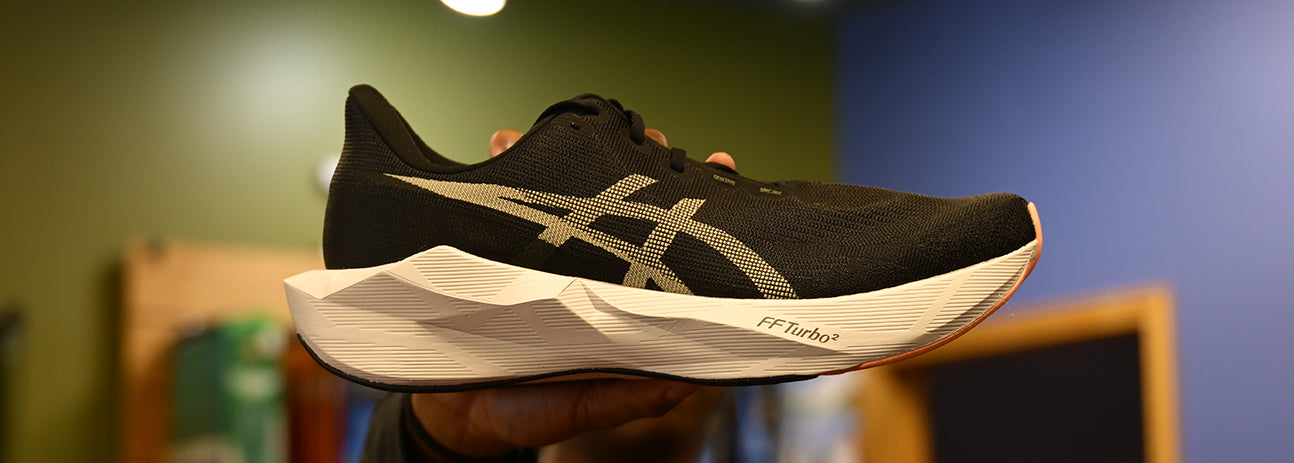
ASICS updated the midsole, outsole, and upper on the Novablast 6, and the biggest change is under the forefoot, where I felt more energy in the toe-off than I have on any Novablast in a few versions.
A More Energetic Forefoot
Most of the midsole still uses FF BLAST MAX, which is the same soft, protective foam that's given the Novablast its cushioned feel all along. That part of the ride hasn't changed much, and honestly, it didn't need to — it's what makes the heel feel so forgiving.
What ASICS added up front is a pod of FF TURBO SQUARED foam, the same more responsive foam I've felt in some of their faster, more performance-oriented shoes. Dropping it into the forefoot of the Novablast gives the front of the shoe noticeably more pop, without turning the whole thing into a stiff, aggressive racer.
I feel this most in the transition. The landing is still soft, exactly how Novablast fans expect it to feel, but the second I roll onto my forefoot, the shoe wants to push me forward. It's the closest this line has felt to its old "why is this so fun" reputation in a few versions, and it makes the shoe more capable during progression runs and steady efforts than the 5 ever was, not just more comfortable at easy paces.
Improved Outsole Coverage
Wet traction has been a fair criticism of past Novablast models, and I was glad to see ASICS address it directly here. The Novablast 6 uses ASICSGRIP rubber through the forefoot, where I need traction and push-off grip most, and a more durable AHAR LO compound around the heel, where I tend to wear my shoes out fastest.
On dry pavement, I noticed the difference right away — the shoe felt more planted through turns and quicker changes of direction than the 5 did. I haven't put in enough wet-road or icy-parking-lot miles yet to give a final verdict on rain and snow performance (this being Northwest Ohio, that testing window won't stay open long), but early signs are encouraging, and I'll keep adding miles in a wider range of conditions.
A More Secure Upper
The Novablast 6 moves to a new engineered woven upper that feels lighter and more flexible than the mesh on the Novablast 5. The heel is the improvement I noticed first — a padded collar holds my foot down noticeably better, and I didn't get any real heel slip across my testing. The tongue has enough padding to feel comfortable without turning bulky, it stayed put, and the lacing made it easy to dial in the midfoot.
The one fit note I want to flag: on my narrower-footed customers who've tried this on in the store, a few felt the woven material press down over the top of their toes once the laces were snugged up. I haven't seen it cause blistering, but it's the kind of thing that's easy to miss trying a shoe on for thirty seconds in the aisle and only notice three miles into a run. It's exactly the kind of detail I'm trained to catch during a fitting, and it's a big part of why I still think trying shoes on in person beats guessing off a size chart online.
ASICS Novablast 6 Sizing and Fit
The Novablast 6 fits true to size in length. The heel and midfoot feel secure right out of the box, and the updated heel construction locks down noticeably better than the Novablast 5 — we didn't get meaningful heel slip during testing.
The forefoot has comfortable room for natural toe splay, which is great for wide feet, orthotics, or anyone who simply prefers a roomier toe box. If you have a narrow or lower-volume foot, pay attention to how the new woven upper sits across the top of your toes once the laces are tightened — a few of our testers noticed pressure there. Sizing down usually won't fix that; it's a volume issue, not a length issue, so it's worth comparing against another model if that's a concern for you.
Dave's Fit Takeaway
I'd recommend this shoe to a wide range of people — neutral runners, walkers, retail and healthcare workers, and anyone who wants a single shoe for both mileage and standing comfort. If you've got a narrower foot or you've struggled with volume issues in past ASICS models, swing by one of our Sylvania, Perrysburg, or Findlay locations and let a Fit Specialist walk you through it side by side with a couple of alternatives.
ASICS Novablast 6 Performance Review: On the Run
The Novablast 6 delivers a genuinely impressive combination of cushioning, bounce, and stability. What stood out to us first was how naturally the shoe moves from midfoot through the forefoot — it doesn't fight your stride or shove you into a pattern that doesn't feel like your own.
Easy and Recovery Runs
At easy paces, the FF BLAST MAX cushioning is soft and absorbing without feeling like you're sinking into it. The Novablast still isn't the softest shoe in the ASICS lineup — the Gel-Nimbus holds that title — but it feels lighter and more willing to move, which is exactly the balance a lot of daily-mileage runners are after.
Daily Training
This is where the Novablast 6 makes its strongest case. It's comfortable without ever feeling boring, protective enough for regular training, and lively enough to keep everyday runs from feeling like a chore. For runners who like to keep their shoe rotation simple, this can realistically cover a large share of a weekly mileage total.
Long Runs
The cushioning holds up well as fatigue sets in, and the more energetic forefoot helps the shoe keep rolling forward late in a run. It's a strong option for half marathon and marathon training. If you want the plushest, most relaxed long-run feel available, the Gel-Nimbus is still worth a look — but if you'd rather your long-run shoe feel lighter and more responsive, the Novablast is the better match.
Faster Running
The added forefoot pop makes the Novablast 6 more capable during progression runs, steady efforts, and moderate tempo work than the 5 ever was. It's still not a dedicated racing or interval shoe — for track sessions or race day, most runners will want something lighter and more purpose-built. Think of the Novablast 6 as a versatile daily trainer that can handle a faster day here and there, not a replacement for a true performance shoe.
Is the ASICS Novablast 6 Stable?
The Novablast 6 is a neutral running shoe and does not contain a traditional stability system. However, its broad platform and relatively secure heel give it a more stable feeling than some highly cushioned neutral shoes. The ride feels controlled and does not have the loose or unpredictable feeling sometimes associated with very soft, high-stack trainers. Some runners with mild stability needs may find it comfortable, but runners who consistently benefit from added guidance should compare it with a dedicated stability model such as the ASICS Gel-Kayano or GT-2000. The right choice depends on how the shoe fits and functions on your foot—not simply on whether you have been told that you pronate.
Who Should Consider the ASICS Novablast 6?
The Novablast 6 may be a good choice if:
- You want one shoe to handle most of your weekly training
- You enjoy soft cushioning with noticeable rebound
- You want a daily trainer that can also handle moderate faster workouts
- You are training for a 5K, half marathon, or marathon
- You liked earlier Novablast models but wanted more responsiveness than the Novablast 5
- You prefer a neutral shoe with a broad, relatively stable platform
The shoe works particularly well for runners who do not want to maintain a large rotation. It is comfortable enough for easy days, protective enough for long runs, and responsive enough for steady and tempo efforts.
Who May Prefer Another Running Shoe?
The Novablast 6 may not be the best option if:
- You need a dedicated stability shoe
- You prefer a low, firm, and highly grounded ride
- You have a lower-volume forefoot
- You primarily want a shoe for short intervals or racing
- You want the softest and most protective cushioning available
- You prefer the predictable feel of a more traditional daily trainer
Runners seeking maximum cushioning may prefer the ASICS Gel-Nimbus. Runners who want traditional, dependable daily comfort may prefer the Brooks Ghost. Runners seeking a more aggressive workout or race-day feel should consider a dedicated performance model.
ASICS Novablast 6 vs. Novablast 5
The biggest difference is the forefoot. The Novablast 5 was soft and comfortable for easy and daily mileage, but I felt it got too relaxed once I tried to pick up the pace. The FF TURBO SQUARED forefoot pod on the 6 fixes that, giving it a livelier toe-off during progression runs, steady efforts, and moderate tempo work. The 6 also brings improved outsole coverage, better initial traction, and a more secure heel — genuine upgrades, not just a refresh, in my opinion.
ASICS Novablast 6 vs. Brooks Ghost 18
Both are excellent neutral daily trainers, but they feel like different personalities to me. The Novablast 6 is softer, taller, bouncier, and better suited to runners who want one shoe to cover several paces. The Ghost 18 is more traditional, more grounded, and more predictable — smoother without the extra bounce, and a great fit for runners who value familiar, dependable comfort over excitement. I'd say choose the Novablast 6 if you want your daily trainer to feel fun, and choose the Ghost 18 if you want it to disappear on your foot.
ASICS Novablast 6 vs. ASICS Gel-Nimbus 28
Both are highly cushioned neutral shoes built for different jobs. The Novablast 6 is lighter, more energetic, and more capable at faster paces — a better one-shoe solution for daily mileage plus workouts, in my experience. The Gel-Nimbus 28 is softer, more relaxed, and a stronger choice for recovery runs, walking, and comfort-first long runs. Choose the Novablast if you want cushioning without giving up responsiveness. Choose the Gel-Nimbus if maximum comfort and protection is the whole point.
ASICS Novablast 6 vs. Saucony Endorphin Azura
Both sit in that growing lightweight, highly-cushioned category that can do more than just easy mileage. The Novablast 6 offers a soft landing, a roomy forefoot, and a lively-but-relaxed ride that's comfortable slow and capable fast. The Endorphin Azura leans more performance-oriented, with a quicker, more directed transition. Fit and ride preference matter so much in this comparison that I'd really recommend trying both on before deciding.
The Final Verdict
The ASICS Novablast 6 is more than a minor refresh. The FF TURBO SQUARED forefoot pod brings back the lively toe-off that a lot of runners missed in the 5, and the improved outsole and more secure heel round out a shoe that finally feels complete again. It's comfortable enough for easy and long runs, but responsive enough for progression runs and moderate tempo work — which makes it a strong one-shoe option for most of a runner's week.
The main thing to watch for is the forefoot upper. If you have a narrower or lower-volume foot, come try it on rather than ordering blind, since a few of our testers noticed pressure across the top of the toes. It's also not our pick for runners who need dedicated stability or a true racing shoe.
Overall, the Novablast 6 brings the fun back while becoming a more practical, more complete daily trainer. Neutral runners looking for a cushioned, energetic, do-it-all shoe should put this one on the short list — and so should anyone who just needs a genuinely comfortable shoe for a long day on their feet.
ASICS Novablast 6 FAQ
What's new in the ASICS Novablast 6 compared to the Novablast 5? The biggest update is the FF TURBO SQUARED foam pod added under the forefoot, giving the shoe a more energetic toe-off. It also gets updated outsole coverage (ASICSGRIP forefoot, AHAR LO heel) and a more secure, updated woven upper.
Is the ASICS Novablast 6 true to size? Yes, for most runners. It fits true to size in length. The forefoot may feel roomy for narrower or lower-volume feet, so any fit concerns are usually about volume, not length.
Is the ASICS Novablast 6 good for people who aren't runners? Absolutely. Its cushioning and stable platform make it a genuinely good option for all-day standing, walking, and anyone recommended a supportive shoe by a doctor or physical therapist — no running required.
Is the ASICS Novablast 6 good for orthotics? The roomy toe box has enough volume to accommodate most custom orthotics or insoles comfortably. I can help confirm fit and volume with your specific insert during a fitting.
Is the ASICS Novablast 6 good for long runs and marathon training? Yes. The cushioning protects over distance and the responsive forefoot helps the shoe keep moving smoothly as fatigue sets in, making it a strong option for half-marathon and marathon training.
Is the ASICS Novablast 6 good for speed workouts? It handles progression runs, tempo work, and steady efforts well. For short intervals, track sessions, or race day, I'd point most runners toward something lighter and more purpose-built.
Is the ASICS Novablast 6 a stability shoe? No, it's a neutral shoe. Its wide base and secure heel give it a steadier feel than many cushioned neutral trainers, but if you need dedicated guidance, take a look at the ASICS Gel-Kayano or GT-2000.
Is the ASICS Novablast 6 worth upgrading from the Novablast 5? If you wanted more forefoot response, better grip, and a more secure heel, yes. If you only use the 5 for easy mileage, you may not need to replace it immediately, but at a similar price point, I think the 6 is the more versatile shoe.

Have questions about whether the Novablast 6 is right for you? Stop by any Dave's Running Shop location in Sylvania, Perrysburg, Delta or Findlay for a free shoe fitting, or ask about our gait analysis if you're dealing with foot pain, orthotics, or a doctor's recommendation. We've been helping Northwest Ohio get faster, go farther, and feel better since 1973 — runner or not.